Monday, January 12, 2015

Infinite Mess (Part One)

Uh-oh. That's it. I'm going to do it. I am going to criticize a very well-beloved author, an author that touched the hearts of millions of people, one of the most influential and innovative writers of the last 20 years, according to the Los Angeles Times, also one that met a tragic and untimely end, and therefore untouchable.


The reactions of literary fans are known to be sober

I'm not going to be only critical, I am going to destroy one of his works (well, at least some lines). I am talking about David Foster Wallace, the brilliant mind behind Infinite Jest, an encyclopedic, metamodernist, hysterical realist novel that almost single-handedly put him in the curriculum of English literature courses. He's edgy, irreverent, inventive and also sweet, how can I possibly go against him (especially since he cannot defend himself)? Not only that, but I'll even claim that I am better than him in explaining some stuff! Oh my, some little blogger really went over his head, now.

I will use his words to defend myself:

The Mentally Ill Mathematician seems now in some ways to be what the Knight Errant, Mortified Saint, Tortured Artist, and Mad Scientist have been for other eras: sort of our Prometheus, the one who goes to forbidden places and returns with gifts we can all use but he alone pays for. 

Well, here I am; as a Prometheus (and maybe Mentally Ill Mathematician, as this blog seems to attest) I can be forgiven if I bash a literary genius, as I am also bringing gifts for everybody, guys! They come from forbidden places!

Unfortunately, it seems that Foster Wallace didn't go where I've been. In 2003 he wrote a booklet, Everything and More, about the history of infinity, and especially the work of our good old Cantor. Great, right? Finally some popular recognition to our hero! So, is it any good?


Disclaimer: I haven't read it. What I read are the critical reviews of Rudy Rucker and Michael Harris, the second one being really interesting as it is more forgiving to the author, and some other snippet caught here and there in some preview, It was enough to bum me. There is always a misunderstanding when writers try to explain mathematical concepts: the literary way of dealing with concepts is through vagueness.  The beauty of a poem is that the words carry with them many, many meanings, and elicit in our mind different responses, therefore being able with this overlap to create sensations that would be impossible to explain in plain words. Mathematics is the opposite: its beauty is in the perfection of its concepts. It's a huge mechanism full of cogs and wheels, and yet everything works perfectly, every minimal part is on time. It's like juggling, or rock balancing: the slightest error can ruin everything.


Literature vs Mathematics
(Left: (c) Frank Grisdale)

You can see, then, how treating mathematical concepts with literary tools just doesn't work. It's even worse in this case: DFW is aggressively post-modern, and one of the staples of aggressive post-modernism is the unreliability of the narrator. And he admits that in this book! So, what's the point of reading a mathematical book where the writer always tries to trick you? Not only that, but he's trying to invent a new style, called "pop technical writing", that uses tons of footnotes (of course) and abbreviations that no one ever used. A complete mess.

Well, then, that is how it is written. But what about the content? Surely there is a lot to learn reading this book, right?

No.

Unfortunately, there are many, many errors. There are websites that list all of them. There is enough material to publish one post per day, for a year. Now I cannot do that, I have already very few readers without actively alienate them with DFW marathons, so I'll choose just one. But it's a big one. Imagine: you spent hours and hours trudging through this book, through all the ridiculous fake notations, through hundreds of pages on convergent series, when finally you are realizing that the book had a direction, that all of this was to reach a particular point, You turn the page ready to read it, no, to experience it...

and it is wrong.

The musical equivalent

What? You don't expect me to explain the climax now, do you? Just go here to read about this crime against infinity.

Tuesday, December 30, 2014

And the best tattoo of the year 2014 is...

Ok, I am a standard mathematician. I don't want to reinforce the trite stereotype of the nerd math-lover, but I have thick glasses, often the colours of my clothes don't match (and my clothes are too big/too small/perfect just for old people), I learned how to bike waaay after learning the difference between mass and weight, and of course I am terrified, terrified by needlespleasepleasepleasetakeoutfrommyviewthatinstrumentofterror. I'm hopeless, you really wouldn't expect me to dissert about the current fashion in tattoos, would you?

Yet, Buzzfeed made a list of the most trendy tattoos of the year 2014. And what do we have here?

Photo from here

The lemniscate really exploded this year. Even someone like me had to notice this trend in the skin of the people around. The most popular is probably the one with "love" embedded in it, or other writings (note the Buzz Lightyear reminder!)

Photo from here

and the combos "feather+infinity" and "finger tattoo+infinity" are also ubiquitous.

 Photo from here

Photo from here

There are tumblrs devoted to it and all sorts of websites. But I am a set theorists, not a fashion designer, so what can I say to you about it?

Well, now I am about to dump to you a nugget of information that will surely make you popular with your friends. You can ask: why there is one symbol of infinity, when there are many infinities? The reason is that the lemniscate, in mathematics, always refers to the potential infinity, i.e., the infinity you cannot reach, (I explain this here) while each different actual infinity, i.e., an infinity considered as size of an infinite set, has a different symbol. Cool, huh?

Pick up artist suggestion
So, you are at a New Year party and you see a cute girl with an infinity tattoo. What do you do? You go close to her, you say "Hey, did you know that this symbol only means potential infinity? But the actual infinity..." Pause. "... is in my pants".

And then you pick from your pants' pocket a piece of paper with an aleph on it. Mark my words, she'll throw herself to your arms. You're welcome.

You want a symbol that it's even more than infinity? Here you are

Monday, December 22, 2014

Teoría de conjuntos (a poem for Christmas)


Christmas is back! The most... depressing period of the year. Really, while the peak of suicides over Christmas is a myth, it surely can bring the worst in our souls: extremely overcrowded shopping streets (with the included unnecessary touching, keep your heels far from my feet, woman, thanks), creepy Santa Claus(es?) grinning at every corner, sad, pale light decorations that always miss a row of burned bulbs and that in the most flamboyant cases will surely induce a seizure. And what about the perfect present you have to choose for your Nazi sympathizer cousin that you managed to avoid for one year?

For this reason, this time I'll try to avoid the hard mathematics and I'll post something... warmer. A poem, whose title is "Set Theory"

Teoría de conjuntos

Cada cuerpo tiene
su armonía y
su desarmonía.
En algunos casos
la suma de armonías
puede ser casi
empalagosa.
En otros
el conjunto
de desarmonías
produce algo mejor
que la belleza.

 (taken from here)

This is a poem by Mario Benedetti, a Uruguyan poet, probably one of the most important writers in Latin America in the last century, even if he is not really known in the English-speaking world. 

Unfortunately, my knowledge of Spanish and English is not enough for a good translation, so if you don't know Spanish (hello, 93% of the world population!), I can just give you the meaning. In the end, it has nothing to do with maths: "conjunto" in English is "set", but also "collection", "whole". Benedetti says that every body has a harmony and a disharmony. somethimes the sum of harmonies can be almost loathsome, while in other cases the collection of disharmonies can produce something even better than beauty.

So, nothing to say about math here, the "set theory" of the title was just the inspiration for Benedetti to write a small and wise poem about the beauty of the imperfection of human nature. Keep it with you this days: what if the collection of all the horrors we will have to endure for the holidays, in the end really forms something beautiful?

I'll take Benedetti's word here.

Thanks to Luz for having pointed me out this poem! See? The suggestions box works!

Looking for something light? Then naive Set Theory is for you. 

Monday, November 3, 2014

Intermission

It is time for this blog to take a little pause. I mean, you wouldn't think that finding set theory instances in pop culture would grant the same rapid fire coverage of, say, Hello Kitty Hell, would you?

So, today no pop culture. Instead here is a video:


This is the Full Program: Infinity part of the World Science Festival. A Philosopher/Theologician, a Mathematician, a Set Theorists and a Physicist meet together, and instead of starting a joke they discuss for more than one hour about infinity. If you are seriously interested in infinity, this is a nice video to be introduced to, with different perspectives. In parts it is a bit technical, so take your time, don't sweat it.

The introduction is fantastic, with a parade of people talking about infinity in absurdely vague and personal terms, all thinking that infinity is central in their work, like a yoga man, a librarian (!) and of course, an ultrafinitist (that, frankly, doesn't really come out well from the comparison).

Sit back and enjoy the ride!

Here is some more connection between Set Theory and Theology. Oh, and the above is divulgation done right. Wanna see divulgation done wrong?

Tuesday, October 21, 2014

The Real Meaning of To Infinity and Beyond!

Yes, I went there. I finally acknowledged the elephant in the room, and I am writing now about the most used and abused quote about infinity.

To... boundlessness and... above?

I'm talking of course about the infamous catchphrase of Buzz Lightyear in Toy Story or, as Imdb puts it:

[repeated line
Buzz: To infinity, and beyond! 

What is the meaning of "To infinity and beyond?" 

It seems a throwaway line, but hidden there is a deep philosophical meaning. It pops up here and there in pop culture and even in random discussions with friends. In 2001: A Space Odissey just before the psychedelic "Star Gate" sequence a title card appear, "Jupiter and Beyond the Infinite" (an inspiration for Buzz?). In the hit Single Ladies (Put a Ring on It), Beyoncé sings "... and delivers me to a destiny, to infinity and beyond.", There are then the album Beyond the Infinite, by trance group Juno Reactor, or the Greek film Eternity and a Day, by director Theo Angelopoulos. In 2008 this sentence helped father and son to survive a shipwreck. And let's not forget infinity plus one! And the lovey-dovey couples smooching "I love you infinity times and more". There are probably infinite other examples (and more!). 

It sounds paradoxical: how can you go beyond the infinity? It's not possible to reach the end of infinity (because it is infinite), so how can one overtake it? One needs to change completely point of view: from potential infinity to actual infinity.

Let me go back to the example of Achilles and the tortoise, just like this blog started. You have the tortoise and Achilles, say, 10 meters apart, Achilles in the back. They run. Achilles is much faster than the tortoise, so when Achilles reached the point where the tortoise was, the tortoise just made one meter. Achilles run that meter, and the tortoise is 10 cm ahead. And so on, and so on. Will Achilles ever reach the tortoise?

If you have the mentality above, it will not: you have this infinite succession of states: 10 m distance, 1 m distance, 10 cm distance, ... and you cannot reach the end of it, because it is infinite! This is the so-called potential infinite, potential because you never realize it in full, you just see parts of it.

But we know that Achilles reaches the tortoise, right? We're not that stupid. So what? Well, this is where Cantor shines! He managed to treat in a formal way the actual infinite. You pick all the infinity, you put it in a sack, and you treat it as a whole, completed object. So you can imagine what happens after it, in this case Achilles overtake the tortoise, turns and makes very funny faces. "Brlbrblrblrl".

Think of the potential infinity as an infinity you are walking inside. Like, just go out now and try to reach the horizon, it will always go on and on and you will never reach it. But the actual infinity is like seeing everything from above, so instead of walking pick a drone and go up, up, up, and you can embrace everything with a single view. (Of course, the metaphor works only if our Earth is flat and infinite, sorry, so I guess that makes no sense).

Another Zeno's Paradox: the dichotomy paradox. You have to go to a bus station that is 1 km far. To go there, you have to go half kilometer far. And then a quarter kilometer more. And then an eighth more. How can you reach the bus station? In mathematics, the distance you make is written like this:

According to a potentialist, this makes a potential 1, that is, is closer and closer to 1 without ever reaching it. According to an actualist, this is 1. What is the difference, you say? Look at this:

How much is this? According to an actualist, it is 2. According to a potentialist, it is BLAARGH GET THAT AWAY FROM MY FACE! SATAN!


Artist's rendition

The potentialists say that this is just a trick, that our limited minds just cannot comprehend actual infinities, and yet, mathematics goes just smoother with them, and the paradoxes are solved. Thanks, Cantor!

You know what? Let me see what the Internet thinks that "To infinity and beyond" means...

Oh, boy.

Fun fact: there are many, many mathematicians, even big experts, even Fields medals, that just have no clue about this. They work in mathematics like they were in the 19th century, willfully ignoring that all their work is founded on this.

This is the first results in Google (hopefully the second after I post this).

Definition in Mathematical Circles:
What exactly does Buzz Lightyear mean when he says, "To Infinity and beyond!"? A few professionals at Harvard investigated the origin of this quote and traced it back to limits. According to Dr. Sanjay Gupta, "Buzz Lightyear is a metaphor of a function which approaches a certain number, but never actually reaches it." However, experts at MIT believe that Buzz Lightyear is referring to vertical asymptotes. Dr. Benjamin Hernandez says, "It is possible to cross horizontal asymptotes, but verticals are impossible. Buzz Lightyear is showing everyone that he can do the impossible and cross horizontal and vertical asymptotes."

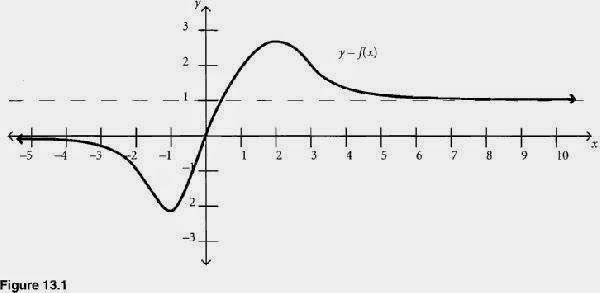
Now, I don't know who are these guys. Most probably they are misquoted, maybe they don't exists, so I am not really against them. But what is written there, trying to sound professional as heck (Harvard! MIT! Bum!) is far-reaching or just nonsense. The first sentence, by Dt Sanjay Gupta, is a typical expression of potential infinity (it approaches a certain number but never actually reaches it) and does not explain anything. Where is the beyond? The second sentence makes more sense: here is a horizontal asymptotes:


The asymptote is that dashed line. See? The function crosses it. Here is a vertical asymptote:

The function doesn't cross the line. And Buzz can! Well, OK, but... isn't this a little bit too technical? Also, isn't it a bit underwhelming that "Infinity and beyond" means a little bump in a line, just like your body when you eat too much Marshmallow Fluff?

INFINITY!

So, forget about what you read online. The meaning of "To infinity and beyond", even mathematically, is: we all think that we are trapped in our human limits, without escape, but in the end it is just an illusion. Buzz (and Cantor) is showing us the way to recognize the illusion, change the perspective, finally break free and go! leaving all our chains behind, going were it was previously unthinkable, unimaginable.


You hear that, potentialists?

PS. I am actually going to Harvard next week. If I meet Dr. Sanjay Gupta, I'll let you know.

Statistics says that probably this is the first page of the blog you are reading. Then, may I suggest to read the manifesto, to understand what is this about? Or just skip to the meaty parts, like the posts on "The Fault in Our Stars", or "The Big Bang Theory", or a cute AT&T advertisement.

Monday, October 6, 2014

One Reinhardt and counting...

The original post has been changed: the attribution of the game has been clarified.

Can you hear it? Do you hear that sound? It's something like streeeeeeeeaaaaaaatch. It's me stretching the theme of the blog to accomodate this topic.

You know 2048? Of course, everybody knows it. It's a very addicting game by Gabriele Cirulli, and the Wall Street Journal called it "almost Candy Crush for math geeks".

 Addiction has a face.

I cannot describe it.  Just play it. Or don't! You have to read this blog, don't get distracted.

The game is open source, so anybody can make a personal version. But then, don't you feel that the numbers here are a bit... small? 2048 is so tiny, is there a way to go really big?

If you dare to adventure the deep, deep academia web you'll find a specific version... with large cardinals! Now also you can climb up the large cardinals hierarchy! The name of the game is Reinhardt. The original idea was by Yizheng, and then it was picked up by Chris La Sueur, that changed the large cardinals and published it.


Now, Chris is so kind to suggest you not to play to the big version, but I am evil and I push you to try that instead of Reinhardt. It is called 1=0, and it is cleaner and more strategical.


I thought about giving you the list of the cardinals involved, but why ruining the fun? Part of the delight is in the exploration!

But why it is called Reinhardt? This is the skeleton in the closet of all set theorists.


The reaction of set theorists when asked about Reinhardt and large cardinals


Once upon time (1969, to be precise), William Reinhardt was studying some large cardinal, and had an idea: to build the largest cardinal ever, the king of large cardinals, the most powerful! We now call it Reinhardt cardinal.

But just after months, Kenneth Kunen proved that it was too big and powerful. In fact it just couldn't exist! Set theorists wanted the absolute power, but they overshot and reached a contradiction, and now the tale of the non-existing Reinhardt cardinal is taught to all students, as a sombre reminder that in trying to achieve too much, one risks to destroy everything. Anyway, Reinhardt cardinal is the largest cardinal, even if it does not exists, and the aim of the game is to reach it.

And why the big one is called 1=0? This is more difficult to say, probably I will write it in another post. (Edit: here it is!)

Now you can go playing! Have a nice waste of time!

Many large cardinals that appear in the game already appeared here. Interested in just one large cardinal? Make it this one, says Sheldon.


Monday, September 29, 2014

God and the Big Bang Theory

The title caught your attention? Good! It would seem at the beginning that this has nothing to do with set theory, but trust me and go on.

This time I am going to talk about the Big Bang Theory. Yes, not the awe-inducing cosmological model for the early development of the universe, but the sitcom (notice the uppercase T?). What can I say about this sitcom that has never been said before? Extremely popular, it lures the nerds with tons of citations about science, science fiction and fantasy, but at the same time it ridiculizes them, but anyway less than other series in the past. The humour is predictable and comforting. Anyway, everybody agrees that, like all the TV series, with time it became less interesting, so I stopped seeing it.

Until this week! When this discussion on Mathematics Stack Exchange made me curious again, and I have seen the episode 8x02 "The Junior Professor Solution", aired the 22 September 2014. So, first of all, kudos to Doug Spoonwood for having spotted this, and to Asaf Karagila for being the first to realize its significance.  I cannot link the video, of course, so I'll describe the scene. Sheldon, the genius of the series, has to prepare a lesson for Wolowitz, and he wanted it to be as hard as possible. Sheldon is showing whiteboards full of difficult formulas, saying

Oh, I'm working on my lesson plan for Wolowitz. He is going to be so lost. Look at this section over here.


Even I don't really understand it.

I DO! I DO! You suck, Sheldon! Ha! Let's see it closer:


This is the famous proof by Gödel of the existence of God (better known as Gödel's ontological proof). Woah. I will leave you a moment to contemplate the magnificence of this discovery.


No, no, no, what are you thinking? Militant atheists, don't think that Gödel was a crackpot (well, he was, but after that). Dawkins, you got it wrong (not for the first time)! And militant religious, don't go around saying that the existence of God is logical (gah). Why do you always have to fight? He didn't really proved the existence of God, in reality. The right way to see it is as part of the history of philosophical logic.

It was pretty common in the old days to try to prove the existence of God via logical arguments. Think Anselm of Canterbury, Descartes, guys like that. Gödel found logical mistakes in those arguments, and just rewrote them in the current logic language, i.e. modal logic, which distinguishes between necessary truths (something that must be true, no matter what) and contingent truths (something that is true, but just because, if it weren't true everybody would be chill). Nothing really new, then, and nothing real. It is just syntax, empty words, he was interested in the reasoning, not in its connections with reality.

Basically (I am simplifying here) Gödel said:

A1) a positive property can have only positive properties as consequences (optimist)
A2) a property is positive if and only if its negation is not positive
A3) being God is positive (this is slightly an understatement)
A4) if a property is positive, it is because it must be positive (nothing left to chance here)
A5) necessary existence is a positive property (again, quite optimist, if something must exists, then it is good)

If this can be, then there exists an object with all the positive properties, i.e., God. That's it. All the details are in the Wikipedia link, it's pretty formal, but it is not difficult. He could have written "fairy" or "vegetable-y" instead of "positive", and "unicorn" or "carrot" instead of "God", and he would have proved the existence of a unicorn or of a carrot.

But look again at Sheldon's whiteboard! See, there are A1, A2 etc also there. I did it on purpose, what is written in the whiteboard correspond exactly to what I wrote here. Almost. There is a horrible mistake.

This is what Sheldon wrote, translated from formalese to English:

A2) a property is positive if and only if its negation is positive

But Sheldon! What did you write?! How can this be? You really didn't understand the proof.

And what about Set Theory? This is where things got interesting. I told you that God exists if  there exist positive properties. Do they? Harvey Friedman has a manuscript on that, where he defines God and positive properties more carefully, and proves that they exist if... if...

Ta-da!

if there exists a measurable cardinal! Step aside, Pope. We did your job. Talking about solving unsolvable problems with large cardinals!

Update: it turns out that Gödel hit a wall here. In 2013 someone managed to prove (with Artificial Intelligence, nonetheless!) that the hypothesis A1-A5 are actually contradictory taken all together, so Gödel proof it's just wrong. Alas, all this post for nothing.

You want to build a measurable y yourself? Go here. You like to see discussions about infinity between theologians and set theorists? Then this page is just for you.